
Dividing property can be one of the most challenging and emotionally charged parts of ending a marriage.
Assets often carry both financial and sentimental weight, and the process of deciding who gets what can quickly become a source of conflict.
The good news is there’s a way to simplify property division without resorting to lengthy, costly, and emotionally draining court battles, and that’s mediation.
When done with a structured approach, mediation creates a space for fair, transparent discussions that help both parties move forward with clarity and respect.
And by focusing on problem-solving rather than winning or losing, mediation makes it possible to reach agreements that benefit both sides while preserving dignity and minimizing stress.
With that in mind, let’s explore why dividing property can be so contentious and how mediation can help to simplify property division during divorce.
Why Property Division Becomes Complicated
Even couples who agree on most issues often find property division to be unexpectedly difficult.
Part of the reason for this is that divorce isn’t just a legal separation, and it often involves the unwinding of intertwined finances.
Deciding how to split everything you’ve built together over years or even decades requires more than just listing assets; it involves balancing legal requirements, financial realities, and personal priorities.
But without a clear process, this stage of divorce can easily become a source of stress, misunderstanding, and unnecessary conflict.
So, before we explore how mediation can simplify property division, we should look at why the division of property often becomes so contentious in the first place.
Emotional Attachment to Assets
A family home, shared investments, or even smaller personal items can hold deep sentimental value, and these attachments, coupled with concerns regarding future financial security, can make it harder to make decisions based purely on practical or financial considerations.
Complex Financial Structures
Some couples have multiple properties, retirement accounts, or business interests that require careful evaluation.
And without expert guidance, it can be easy to overlook tax implications or long-term financial consequences.
Misunderstandings About Rights and Obligations
California’s property division laws are based on community property principles, meaning most assets acquired during the marriage belong equally to both spouses.
But equal and equitable can look very different in practice, and many people enter divorce without fully understanding what the law says.
Influence From Outside Parties
Friends, family, or aggressive legal advice can unintentionally fuel conflict, making it harder for couples to reach agreements that feel fair to both parties.
How Mediation Helps Simplify Property Division

Mediation offers a structured, non-adversarial process that keeps both parties focused on solutions rather than conflict.
Here’s how it helps to simplify property division:
1) A Neutral Setting for Open Discussion
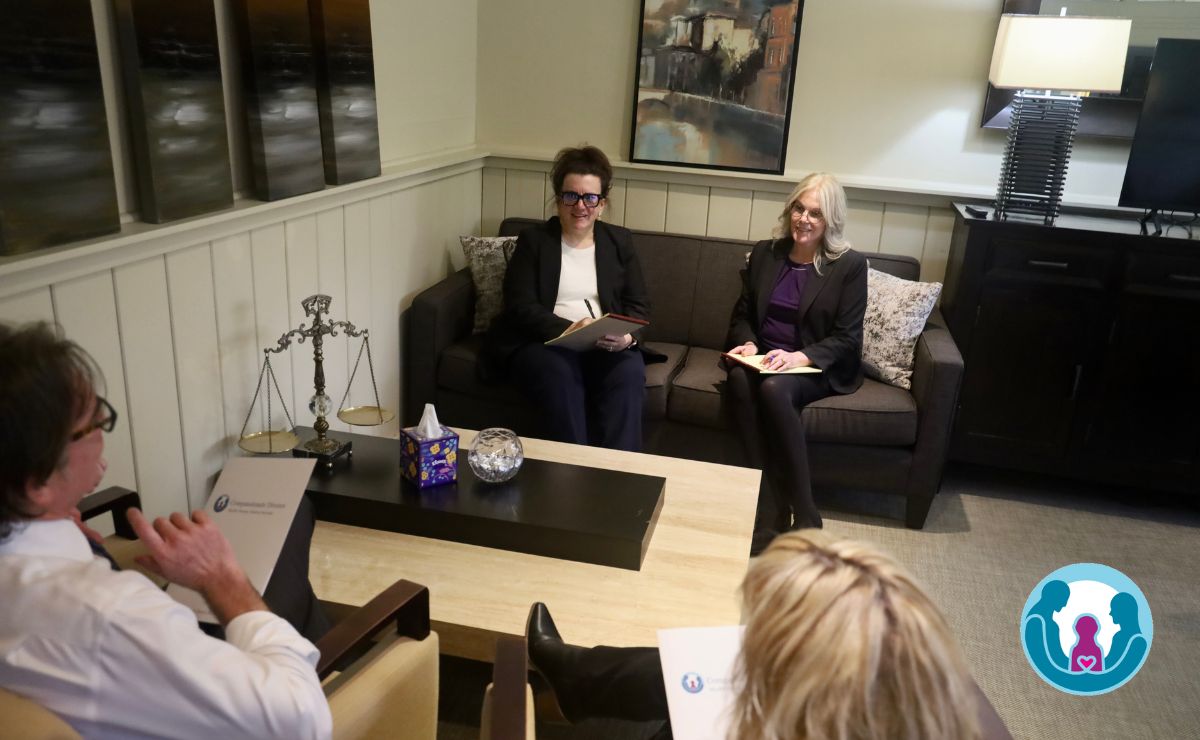
Instead of battling it out in a courtroom, mediation brings both spouses together with a trained mediator, or mediators, often with both legal and psychological expertise, to guide the discussion in a neutral, supportive environment.
2) A Focus on Fairness and Transparency
Mediation encourages full disclosure of assets and liabilities, and it gives both parties the opportunity to review all relevant financial documents, so they can ensure decisions are based on accurate and complete information.
3) Customized Agreements
Court decisions are often limited by rigid legal requirements and delayed timelines.
But mediation gives you the flexibility to create agreements that reflect your unique situation – whether that means trading one asset for another, creating payment plans, or finding creative ways to handle shared property.
4) Reduced Emotional Strain
Because mediation emphasizes respectful communication and collaboration, it can help you to preserve a working relationship with your former spouse, which is especially important if you’re co-parenting after divorce.
5) Significant Cost and Time Savings
Mediation is often faster and far less expensive than traditional litigation.
With fewer court appearances and more direct negotiations, it allows you to avoid drawn-out processes and high legal fees that can drain your resources.
The Structured Mediation Process for Property Division
Compassionate Divorce’s mediation protocol follows a clear, step-by-step framework that’s designed to simplify property division while protecting your interests.
Here’s what you can expect from our mediation process when it comes to property division:
Step 1: Initial Consultation
You and your spouse will meet with our mediation team, which includes both a Certified Family Law Specialist and experienced psychologists, so you can outline your goals, identify concerns, and set expectations for the process.
Step 2: Information Gathering
Both parties provide complete financial disclosure, including documentation of:
- Bank accounts
- Business interests
- Debts and liabilities
- Real estate holdings
- Personal property of significant value
- Investments and retirement accounts
Step 3: Asset Valuation
We’ll ensure both sides agree on asset values, sometimes with the help of independent appraisers or financial experts.
This step removes the guesswork and creates a shared factual foundation for discussions.
Step 4: Exploring Options
Our mediation team will guide you through different division scenarios, considering both immediate and long-term impacts.
In any case, the goal is to find solutions that feel not just equal, but also equitable.
Step 5: Agreement Drafting
Once you’ve reached a consensus, we’ll prepare a detailed written agreement that can be submitted to the court for approval and will become part of your final divorce judgment.
How Mediation Protects Your Financial Future

Simplifying property division isn’t just about reducing stress in the short term – it’s also about setting you up for long-term financial stability.
Poorly thought-out settlements can create problems years later, from unmanageable debt obligations to disputes over assets you thought were resolved.
At any rate, mediation helps reduce these risks by ensuring that:
- You keep more money in your pocket – Avoiding protracted legal battles means you’re not spending your savings on attorney fees.
- Your agreements are comprehensive – Detailed settlements address all assets, debts, and future considerations, leaving fewer opportunities for conflict down the road.
- You can plan for the future with confidence – By focusing on equitable property division, you’re better positioned to rebuild your financial life without unnecessary hardship.
- You avoid unnecessary tax surprises – Mediators can work with financial experts to structure settlements that minimize tax liabilities wherever possible.
Addressing Power Imbalances in Mediation
One concern some people have about mediation is whether it will work if one spouse has more financial knowledge or bargaining power.
Whatever the case, we’ll work to balance the discussion, ensuring both voices are heard and understood. This can include doing things like:
- Bringing in neutral experts to clarify complex issues
- Using separate sessions (called caucuses) when necessary
- Providing education about financial and legal considerations
- Breaking discussions up into smaller, more manageable topics
Emotional Benefits of Simplifying Property Division
The practical advantages of mediation are clear, but the emotional benefits are equally important.
Divorce is often an emotionally draining time, and how you handle the property division process can have a lasting impact on your well-being and future relationships.
In any case, when you use mediation to simplify property division, you:
- Reduce conflict and resentment – Fewer arguments mean less emotional exhaustion, making it easier to focus on healing.
- Protect children from tension – When parents model cooperation, children feel more secure and less caught in the middle.
- Preserve mutual respect – Even if your marriage is ending, maintaining respect helps you communicate better in the future.
- Promote closure – A fair and respectful agreement helps both parties move forward without lingering bitterness.
Practical Tips for a Smooth Mediation Process
While mediation is designed to simplify property division, preparation plays a big role in how smoothly the process goes.
Entering mediation organized, informed, and with the right mindset can make a noticeable difference in both the speed and quality of your outcome.
So, to set yourself up for success, you should:
- Organize your financial documents – Gather bank statements, tax returns, property deeds, investment records, and any other relevant paperwork so you’re ready to provide full disclosure.
- Clarify your priorities – Identify which assets matter most to you and where you’re willing to compromise.
- Stay open-minded – Flexibility often leads to better, more creative solutions.
- Focus on the future – Let go of past grievances and work toward agreements that support your long-term stability.
- Seek professional support – A mediator with both legal and psychological expertise can make a significant difference in the process.
When Mediation May Not Be the Right Choice
Mediation is a powerful tool to help simplify property division, but it isn’t suitable for every situation, and knowing its limitations can help you make an informed decision and avoid frustration later.
All things considered, mediation may not be the best path if:
- There is a history of domestic violence or abuse in your relationship making safe, balanced discussions impossible.
- Either spouse is completely unwilling to compromise or participate in good faith.
- One party refuses to disclose assets or is suspected of hiding property.
In these cases, court intervention or other legal protections may be necessary to safeguard your rights and ensure a fair resolution.
Final Words
Divorce is never easy, but how you approach it can make all the difference.
By choosing mediation, you can simplify property division, protect your financial future, and preserve dignity for everyone involved.
At Compassionate Divorce, our structured mediation process is designed to help you reach fair, lasting agreements without unnecessary drama or expense.
We believe divorce doesn’t have to be a battle, and it can be a step toward a more secure and hopeful future.
If you’d like to learn more about the Compassionate Divorce protocol, and the benefits of divorce mediation, you can read our article, Breaking Up Amicably: The Benefits of Compassionate Divorce or contact us for more information.